The Jazz Repertory Company Blog

The Jazz Repertory Company Blog

Wednesday, 11 November 2015

Jail, Gin & Jazz at the London Jazz Festival; Why You Can't Miss The "King Of Jazz" on 22.11.15

18 Reasons You Can't Miss Our EFG London Jazz Festival Concert at Cadogan Hall this 22nd November, Paul Whiteman: King Of Jazz - Bix, Bing & Rhapsody In Blue.  A 1920s Spectacular. 

1. It's BIG! 
  • It's our biggest ever concert, with 29 world class musicians packed on stage.  
  • We'll introduce you to Paul Whiteman, King Of Jazz; the biggest name on the scene in the 1920s when he had 28 well known number one hits.  
  • He worked with (or launched) the biggest stars in the business including Bing Crosby, Bix Beiderbecke, George Gershwin and paid his musicians the biggest salary of any orchestra.  
  • He was also big on integrity, pioneering the support of black musicians a decade before Benny Goodman; he was blocked from featuring them onstage in the 20s by his management so instead he booked them to write band arrangements behind the scenes.  
 Paul Whiteman (right) with Django Rheinhardt

2. Thomas 'Spats' Langham will be singing this song on 22nd November at Cadogan Hall for our EFG London Jazz Festival concert, in the role of Bing Crosby who got his start with the Paul Whiteman Orchestra. Will it be as saucy as the delicious Betty Boop's version?
Helen Kane Betty Boop 
That's My Weakness Now 1928

3. The night also pays homage to bad boy Bix Beiderbacke, notorious for falling asleep during concerts (thanks to the little nips of gin he took from the ice bucket under his chair) bandleader Paul Whiteman came up with an ingenious solution to making sure Bix didn't miss his solos, scribbling on the second trumpeter's score a few beats before Beiderbecke's cue "wake up Bix."
Bix and The Wolverines

4. The internationally acclaimed Guy Barker will be taking on the role of Beiderbecke in the concert - he talks to the Mighty Pitey about being Bix for London Jazz News - read all about it here.
Guy Barker

5.  Paul Whiteman & His Orchestra once meowed Felix The Cat - sadly we couldn't find an arrangement of this for our EFG London Jazz Festival concert but they'll be much to purr about with 29 musicians on stage including industry expert, Keith Nichols as Paul Whiteman.
Paul Whiteman & His Orchestra (with Bix Beiderbecke) 
Felix The Cat - Columbia 1478-D

6. Paul Whiteman was one of the first musicians to star in his own Hollywood full-length talking feature film (and a very early Technicolor production at that).  Named after the film, King Of Jazzour concert on the 22nd November is also scarily big budget, but at least our 29 musicians aren't as demanding as the original movie cast: production costs included 24 cars purchased for members of the Paul Whiteman Orchestra to use while filming in Los Angeles. Each vehicle featured a custom canvas spare tyre cover emblazoned with Paul Whiteman's image. Fortunately Keith Nichols hasn't put this in his rider. 
Still from the movie 
Paul Whiteman: The King Of Jazz

7. Woody Allen at his best with stunning photography featuring Gershwin's Rhapsody In Blue.  Imagine your own path through London as you hear the brilliant Nick Dawson take on this tune not once but twice the 22nd November (matinee 3pm, evening show 7pm)
The opening of Manhattan
Woody Allen

8. Bad Boy Bix. Tragically addicted to bootleg liquor, in 1929 (two years before his death aged 28) Bix Beiderbecke had an alcohol induced nervous break down and whilst on tour with the Paul Whiteman Orchestra he smashed up a hotel room, 40 years before the Rolling Stones followed suit. We don't think Guy Barker will break anything when he takes the roll of Bix on the day - but we promise to raise the roof.
Keith Richards throwing a TV from the 
Andaz West Hotel Balcony in Hollywood, 1972

9. There are some things you just have to change so our version of Christmas Night in Harlem will be re-written on politically correct grounds. Here are the lyrics you won't hear at our concert:
Christmas Night in Harlem
Paul Whiteman & His Orchestra

10.  Jail Bird Bing. No stranger to prison from an early age (staying overnight as a child for throwing stolen pies at cars), Bing Crosby found himself once more behind bars in 1929, whilst filming the aforementioned feature-length early "talking picture," (extraordinary for also being filmed in colour) "The King Of Jazz" with the Whiteman Orchestra. Jailed for drink driving on the 2nd November, Bing had to be escorted from the jail to the studio whenever he was scheduled to appear with the Rhythm Boys.  What will Thomas 'Spats" Langham do in homage to this "Johnny Rotten of the 1920s" when he takes on the role?
Bing Crosby

11. In 1924 Whiteman presented An Experiment in Modern Music where Rhapsody In Blue was premiered. He started his show with a performance of The Livery Stable Blues – the first ever jazz record from 1917. He chose it to show how primitive jazz was seven years previously and how sophisticated it had now become. Only it somewhat backfired when the performance brought the house down and was a huge hit.
Original Dixieland Jass Band 
Livery Stable Blues (1917)

12. Paul Whiteman, sausages, dogs.  What's not to like?  Our concert tribute to the King Of Jazz, stars Keith Nichols, who in 1974, appeared at Carnegie Hall with the New Paul Whiteman Orchestra.  Dog unconfirmed.
Paul Whiteman

13. Emotional stuff, 84 pianists play Gershwin's Rhapsody In Blue at the 1984 Los Angeles Olympic Opening Ceremony "an Anthem for America," fatherland of jazz. If your eyes aren't moist by 4 minutes 15 seconds...then Nick Dawson will see if he can get you going when he performs this as the centre piece to our 1920s spectacular.
Los Angeles 1984 Olympic Opening Ceremony
84 pianos play Gershwin's Rhapsody In Blue

14.  Strange thing with singers in the 20s, they often didn’t bother to change the gender in love songs, so here is the rather odd version of There Ain’t No Sweet Man Worth The Salt Of My Tears sung by Bing Crosby and the Rhythm Boys.  As featured on November 22nd...
Bix Beiderbecke and Bing Crosby - 
There Ain't No Sweet Man Worth The Salt Of My Tears 1929

15. Whiteman might have been ahead of the curve on race relations, but we're doing it for the sisters: our meet the boys moment sees the wonderful Emma Fisk take the role of jazz legend Joe Venuti on fiddle. Here's a flavour of what she'll be recreating in this great clip from Paul Whiteman’s 1930 movie “The King of Jazz” where the bandleader shows off the great talent he had in his orchestra. 
Meet The Boys - from "King Of Jazz"
Paul Whiteman's Orchestra

16. Bad Boy Bix. Having lost a tooth falling off stage at the end of a gig one evening, Bix Beiderbecke had a false one fitted to enable him to continue to play the cornet. Occasionally this tooth flew off during a performance, leaving Bix crawling through the orchestra looking for it. One evening the audience watched dumbstruck as Bix's tooth hunt spread to include half the orchestra in the search, with the remaining musicians gamely continuing until the crisis passed. Our Bix, Guy Barker, has promised us a full set of securely attached teeth when he performs on the night.
Bix Beiderbecke

17. Bad Boy Bing. Bluebirds and Blackbrids performed by jail bird Bing Crosby (escorted between set and prison by guards) during the filming of Paul Whiteman, King Of Jazz in 1930. Co-starring Harry Barris and Al Rinker as The Rhythm Boys. In our concert the song will feature our very own Rhythm Boys - Keith Nichols, Alistair Allan and Martin Wheatley.
The Rhythm Boys - Bluebirds & Blackbirds 
(from King of Jazz, 1930)

18. And finally, just because they wrote the best lyrics. Thanks (Ira) Gershwin...

I’ve written you a song,
A beautiful routine. 
(I hope you like it.)
My technique can’t be wrong:
learned it from the screen.
(I hope you like it.)
I studied all the lines that all the lovers sing;
Then just for you I wrote this little thing:
(Refrain)
Blah, blah, blah, blah, moon.
Blah, blah, blah, above;
Blah, blah, blah, blah, croon,
Blah, blah, blah, blah, love.
Tra la la la, tra la la la la merry month of May;
Tra la la la, tra la la la la ‘neath the
clouds of gray...
Book tickets to Paul Whiteman: King Of Jazz - Bix, Bing & Rhapsody In Blue.  A 1920s Spectacular for the EFG London Jazz Festival at Cadogan Hall, 22nd November, 2015.  Something to make a noise about.

The Jazz Repertory Company 
Concert Show Reel

Tuesday, 3 November 2015

Guy Baker On The Emotional Power Of Bix Beiderbecke - Ahead Of The EFG London Jazz Festival

As we look forward to our 2015 EFG London Jazz Festival Cadogan Hall concert on November 22nd we spoke to the highly acclaimed trumpet player Guy Barker who is appearing for us in the role of Bix Beiderbecke. 

The show, A TributeTo Paul Whiteman – Bix, Bing and Rhapsody In Blue, is directed by vintage jazz maestro Keith Nichols who worked with Guy back in the late 80’s on their collaboration  “The Bix Beiderbecke Project”.   

Bix was one of the first big stars of jazz but he died tragically young at 28.  He joined Paul Whiteman in 1927 and stayed for a little under two years until ill health caused by bootleg liquor got the better of him.  

His soloing with the WhitemanOrchestra alongside such stars as Bing Crosby and Frankie Trumbauer are amongst some of the greatest moments in early jazz.

(RP: Richard Pite. GB: Guy Barker):

RP:  Guy, we’ve seen you in previous years at the London Jazz Festival in the role of conductor, composer and arranger – is this concert a rare chance to see you playing again?

GB:  Yes, at one time trumpet playing was my whole life but over the last few years the writing has taken over.   I’ve been playing quite a bit more lately and when the opportunity to do this concert came along it gave me the chance to dust down the old 1927 Conn Victor cornet.
  

RP:  Ah, now this is the same model instrument as played by Bix?  I believe that this instrument has a quite distinctive sound and is mellower than the trumpet.

GB: Yes, when I told the great classical trumpet player John Wilbraham that I was involved in a Bix project many years ago he kindly gave me his Conn Victor.   Mainly it’s the musician and not the instrument that makes the sound but having the same instrument as Bix certainly helps me to get closer to the spirit of his playing. 

The Paul Whiteman Orchestra ft. Bix Beiderbecke
From Monday On

RP:  Tell me about hearing Bix for the first time and what you thought of him.

GB:  Well, I first heard recordings of him when I was a teenager.  The first trumpet players I heard that made me feel that this was the kind of music I wanted to play were Louis Armstrong and Rex Stewart.  I came to Bix’s recordings a little after this.

The Keith Nichols Paul Whiteman Orchestra
Singin' The Blues

RP:  Oh, I’d assumed that you’d started with the more modern players and worked backwards.

GB:  No, I pretty much listened to the great jazz trumpeters in almost chronological order but when I was fourteen I was playing in the Crouch End All Stars and got sacked for being too modern.  Later I heard that they wanted someone to play more like Bix so that inspired me to get hold of an album of his playing and when I listened to that sound I got pretty hooked on it.

Music Director Keith Nichols

RP:  Guy, your association with the Whiteman show’s musical director Keith Nichols goes back a long way doesn’t it?

GB:  In the late eighties I got a call from Keith asking if I’d be interested in being involved with his Bix Beiderbecke project.  I told him I was surprised that he had asked me but he said he didn’t want to use a vintage jazz specialist as they would already have their own voice – whereas he could mould me from scratch or, in other words, sit there and do as I was told!   So I bought every Bix record I could find and paid regular visits to Keith who worked with me on getting the correct phrasing and nuances of the Bix style.  I remember him telling me that Bix was the first cool trumpet player and the forerunner of players such as Bobby Hackett and Chet Baker. 
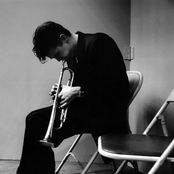
Chet Baker

RP:  Do you have any favourite Bix recordings?

There are certain things of his that have a really emotional effect on me – his playing on I’m Coming Virginia in particular and the solo on From Monday On is very beautiful.  Sometimes there is a kind of nostalgia which I find very touching.  I also love Bix’s piano piece In A Mist which I recoded as a duet with bassist Alec Dankworth.

Bix Beiderbecke
"I'm Coming Virginia"

RP:  As an experienced arranger what do you make of the sound of the huge Whiteman orchestra that Bix was a part of?

I think it’s a glorious sound.  Very intelligent and entertaining and full of beautiful, subtle moments, particularly in his use of strings. 


RP:  Thanks Guy.  I very much look forward to sharing the stage with you on the 22nd November to recreate this glorious music.

A Tribute to Paul Whiteman – Bix, Bing and Rhapsody In Blue is at the Cadogan Hall SW1 (one minute from Sloane Square tube) at 3pm and 7pm on Sunday November 22nd.  Tickets are available here

The Jazz Repertory Company Concert Showreel

Wednesday, 9 September 2015

LONDON JAZZ NEWS FEATURE: The Jazz Repertory Company presents Jazz in New York: The 1930s. Cadogan Hall, Sat. Sept. 19th

"Jazz in New York: The 1930s" will be the sixteenth presentation by Richard Pite's Jazz Repertory Company at Chelsea’s Cadogan Hall (7:30pm 19th Sept 2015). It will feature music from Louis Armstrong, Fats Waller, Billie Holiday, Duke Ellington, Benny Goodman, Lionel Hampton, Eddie Condon, Lee Wiley and Mildred Bailey

Author and broadcaster Alyn Shipton, who will be presenting the show, talks to Jazz Repertory Company’s director Richard Pite, who will also be the featured drummer for the concert:


Jazz In New York: The 1930s
Rehearsal for Cadogan Hall, London, 19th September

Richard Pite: Alyn, I’m very pleased to have bagged you for this concert. At many of my previous concerts I have used the BBC’s other walking encyclopaedia of Jazz – Russell Davies. I never cease to be astonished at the breadth of knowledge both of you share on the history of the music. You seem to have an enthusiasm for every era in its history but do you have a particularly favourite period? 

Alyn Shipton: Because I grew up during the 1960s, those years still have a special place in my heart. There were elder statesmen of New Orleans to be heard, like Louis Nelson and Kid Thomas; meanwhile first generation swing musicians like Buck Clayton and Bud Freeman were touring here; and yet simultaneously British jazz was entering one of its most fertile periods. Because my school was active in all kinds of music, I was lucky enough as a teenager to meet and make music with Michael Garrick (and members of the Rendell – Carr quintet), and with John Dankworth (who wrote Tom Sawyer’s Saturday for our orchestra) while going to the local jazz club once a month to hear Humph and Ken Colyer. So it was immensely fertile in terms of the musical landscape, and I think I owe my breadth of interest to what happened during that decade.

However, my second love has always been the 1930s, the period we are celebrating in this concert, because this is the music my father was keen on and as a child I was captivated by his 78s of Fats Waller, Earl Hines and Duke Ellington.


Alyn Shipton

RP: We will be celebrating the centenary of Billie Holiday with a short set from Julia Biel, who for me beautifully captures the style and essence of her early years. Billie’s still a big influence on young jazz vocalists – is she the most important singer in the music’s history? 

AS: I don’t like to label people “most important” or “greatest” because there’s always an exception to confound the rule. But there’s no doubt that Billie was and remains one of the most profoundly emotional singers in jazz. She rode roughshod over melodies, actually often working in a very narrow range, but she had a unique balance of caring for the words of a lyric, even the frothy ones about sunbonnets and roses round the door, and putting those words into a meaningful context. Whereas Ella’s delivery of words was sublime, and Sarah Vaughan’s grasp of harmony quite dazzling, neither of them managed to inhabit a lyric and create a story out of it with the same consistency and emotional depth as Billie.


Sarah Vaughan 
Misty, Live 1964

RP: Two names that feature in our concert that might not be so familiar to today’s audience are Mildred Bailey and Lee Wiley (American singer Joan Viskant will be paying tribute to them)

AS: Poor Mildred Bailey  had such a short life, dying at only 44 owing to diabetes, but she made some great music during that time. Although she spent some years as Paul Whiteman’s female singer, (her brother Al Rinker also sang for Whiteman, with a young unknown called Bing Crosby) I think her most memorable work comes from her partnership with her sometime husband, the vibes and xylophone player Red Norvo. They were known as “Mr and Mrs Swing” and his openness to new musical ideas coupled with her sureness of touch as a singer make their records hidden treasures that are largely forgotten today. Her big hit was “Rockin’ Chair” but there are plenty of other fine examples.


Mr & Mrs Swing - Mildred Bailey & Red Norvo

“Rockin’ Chair”

There’s been a bit of a Lee Wiley revival going on among listeners to Jazz Record Requests lately, and it’s good to have had the chance to air some of her work as, like Mildred, she’s a largely forgotten figure today. Everybody thinks of Ella Fitzgerald as pioneering the “songbook” album of a particular writer’s work, but Lee was doing this with All Star bands some fifteen to twenty years earlier, starting with Gershwin in 1939. Unlike Mildred, she lived well into the post-war period and her albums from the 1950s are refreshingly different from other singers of the time. She had a directness and a slightly knowing quality about her delivery that is very beguiling.

Lee Wiley

“Manhattan”

RP: For "Jazz In The 30’s" we are featuring the German maestro Matthias Seuffert who also plays saxophone and clarinet in your Buck Clayton Legacy Band. We are both huge fans of his – have you known about him for a while now? 

AS: I first met Matthias in Ascona in Switzerland in the late 1990s, and was immediately struck by his mastery of swing and early jazz styles of reed playing. He’s developed a really big tenor sound, a melĂ©e of Coleman HawkinsBen Webster and Herschel Evans, with overtones of Don Byas, that’s a real contrast to those players who follow a more Lester Young-influenced path, and it’s great to have him in a band doing this because he becomes a sort of rhythmic and tonal centre of gravity. Meanwhile his clarinet playing (using Albert system fingering, which allows the instrument a broader, woodier tone) is a vade mecum of classic jazz, immediately recognisable as Matthias, but encompassing nuances drawn from players as different as Johnny Dodds and Jimmy Hamilton.
The Keith Nichols Paul Whiteman Orchestra
Blue & Sentimental Ft Matthias Seuffert

RP: We are very lucky to have such an array of jazz musicians in the UK who have studied and mastered the styles of the early stars of the music. Enrico Tomasso does a marvellous Louis Armstrong, Keith Nichols has Fats Waller style stride piano off pat, and Martin Litton pretty much covers everyone up to Thelonious Monk. Do you think the playing of repertory jazz has improved as the music’s history has got longer and longer? 

AS: I think repertory jazz has been rather good from the outset. Muggsy Spanier’s Ragtimers did a rather good job resuscitating Chicagoan jazz in 1939, and it goes on from there. What’s changed is that as jazz history has got longer, the smorgasbord from which we can pick and choose has grown immeasurably. Of course we’re lucky that players can emulate earlier great talents with skill and a degree of verisimilitude, but if you took 1960s France for example, you'd hear Irakli doing a more than passable turn as Louis, Claude Luter emulating Bechet and Christian Azzi sounding like James P Johnson. I think what stands out about today’s musicians at their best is that they have their own musical personalities, which they combine adroitly with the essence of earlier styles. So Rico, for instance, is very much his own man on his “Al Dente” CD, but he can equally well turn his hand to a range of material in a concert like this one, with an authentic feel to his timing, tone and choice of notes.


Muggsy Spanier’s Ragtimers:
"Angry"


RP: Someone once said to me “Always remember how young these musicians were when they were playing this great music all those years ago.” A lot of these musicians in the 1930s were in their prime and playing with such power and vitality. It’s all about the excitement and if you didn’t generate that then the club owners would fire you! 

AS: Age didn’t stop many of the swing masters of the 30s from continuing to play with that same degree of excitement and fire. When I heard Benny Goodman in 1981 at Carnegie Hall, he produced half a dozen choruses on Airmail Special that were as utterly dazzling as anything he did in the ‘30s. And I’ve been lucky enough with the BBC to work on broadcasts with the likes of Lionel Hampton and Harry "Sweets" Edison who were every bit as punchy in the 1990s as they had been 60 years before! So I think swing is an attitude of mind, and quite ageless.

Keith Nichols Paul Whiteman Orchestra
Ain't The Gravy Good ft Enrico Tomasso 


RP: Do you have any particular recordings from the 1930s which are firm favourites? 

AS: Too many to list here, but among the high points are Bill Coleman’s records with Fats Waller, things like “Night Wind” and “Believe It Beloved”; Billie Holiday’s sides with Teddy Wilson and particularly the ones with Buck Clayton and Lester Young, like “Mean To Me” or “When You’re Smiling”; Lionel Hampton’s small groups, especially the “Hot Mallets” session, Jimmy Blanton’s arrival with Ellington, say “Tootin Through The Roof” and – because I wrote a whole book about him – Cab Calloway’s records, including the “Minnie The Moocher” saga. My Royal Academy of Music students would also say that for reasons they never quite fathom, I always inflict Sharkey Bonano, Wingy Manone and Louis Prima’s 52nd Street groups on them, just to prove that there were other ways to play the trumpet…


Cab Calloway:
Minnie The Moocher 


RP: I like the Eddie Condon quote about the difference between the old style guys and the new breed. “The boppers flat their fifths. We consume ours”. To conclude, do you have any funny or remarkable stories about any of the 1930s jazz stars we’ll be paying tribute too? 

AS: When Ronald Waller was asked at primary school what his father did for a living, he thought for a moment and said “He drinks gin”. So the high life was all part and parcel of the sounds of the era, and particularly in a country coming out of Prohibition. Jonah Jones told me in a BBC interview that when he worked for Stuff Smith, he and Cozy Cole were fined if they weren’t “high” by the interval — Jones eventually joined Calloway after his doctor said the diet of whisky and marijuana with Smith was killing him. And when Billie Holiday worked the CafĂ© Society for the famously racially tolerant Barney Josephson, his tolerance did not stretch to her smoking pot on the premises. So she really liked it when Doc Cheatham joined her backing band as he smoked a particularly vile and pungent variety of pipe tobacco. She used to persuade him to sit and puff his pipe outside her dressing room so that Josephson remained unaware of the more, er, subtle aroma coming from within!
Billie Holiday & Louis Armstrong

RP: As the concert promoter,  I’d bettter set the record straight on that point, and  reassure anybody coming to the show that our performance will be drug and alcohol free.

LINE-UP:  Keith Nichols and Martin Litton (piano), Joan Viskant and Julia Biel (vocals),  Enrico Tomasso (trumpet/ vocals),  Ian Bateman, (trombone), Anthony Kerr,(vibraphone), Thomas “Spats” Langham  (guitar), Dave Chamberlain (double bass and guitar). The show will also feature the German reedsman Matthias Seuffert and the Australian multi-instrumentalist Michael McQuaid

JAZZ IN NEW YORK: The 1930s is at Cadogan Hall  SW1 7.30 Saturday September 19th.


The Jazz Repertory Company Concert Showreel.
Something to make a noise about.


Wednesday, 2 September 2015

Don't Take It Personally 'Your Feet's Too Big' - Your Free MP3


When I was a kid I always remember late August’s summer reveries being intruded on by a trip to the outfitter to get new school uniform.  I remember not being allowed out to the park on the day of the trip and the feel of the scratchy wool of the, too big, new clothes that I’d have to grow into.  It always made me particularly grumpy.   So bearing that in mind, whilst you’re enjoying the fag end of summer let me remind you of the musical pleasures in store this autumn.

Fats Waller 
Your Feet's Too Big 

We have our Jazz In The 1930's concert on 19th September at Cadogan Hall, London SW1, and we'd like to give you an MP3 of Keith Nichols performing Your Feet’s Too Big which will be featured in his Fats Waller set on that night.  Download here.

Jazz In New York: The 1930s
JRC Showreel

Keith is also the musical director of our concert for the EFG London Jazz Festival on November 22nd.  The show is called “Bix, Bing and Rhapsody In Blue” and will feature the music of Paul Whiteman, the biggest name in 1920’s American music.  We’ve assembled 29 musicians to recreate Whiteman’s music and the line-up features a fine array of vintage jazz specialists and the highly esteemed Guy Barker in the role of Bix Beiderbecke.

That's My Weakness Now:
The Keith Nichols Paul Whiteman Orchestra

We are delighted that the BBC’s Alyn Shipton will be presenting both of our shows – his remarkable knowledge of jazz history will ensure that he’ll be entertaining us all with fascinating facts about these great names of yesteryear.  

The BBc's Alyn Shipton
Host to the Autumn Season of JRC Concerts 

We hope to see you at our Autumn/Winter season at Cadogan Hall: 

The Jazz Repertory Company 
Concert Showreel